Compliance
Compliance matters.
Not just wire on a wall — correct layout, signage and legal safety matter.
Electric Fencing FAQ Johannesburg South built around the real questions buyers ask before they trust an installer: price, compliance, backup power, silent faults, safety, CCTV, alarms, gates and gate motors.
This is not a thin FAQ. It is built to rank for long-tail questions, keep buyers on the page longer, answer objections before they call, and position Safety & Security as the company that explains the real risk clearly — then fixes it properly.
This ranking is intentionally weighted toward electric fencing at 70%, with the remaining 30% covering alarms, CCTV, gates and gate motors. That mirrors how perimeter-security buyers usually think: first line of defence first, then the layers around it.
Not just wire on a wall — correct layout, signage and legal safety matter.
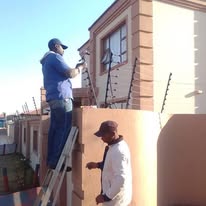
Use real maintenance and testing visuals to back the message.
Cameras that do not record properly create the same false confidence problem.
Perimeter security works best when the layers support each other.
Using your warehouse and domestic image assets so this page feels like part of your main site.













Quick jump cards for the questions buyers ask first
15 ranked questions
Best answer: You can estimate electric fencing by metre, but a serious quote should never rely on metre rate alone. Wall height, corner count, bracket height, number of strands, gate crossings, zoning, energiser size, cable routes, earthing, lightning protection and access all change the job cost.
What matters in practice: A cheap per-metre number can leave out the things that make the fence actually work. The right way is a site check, a proper scope, and a quote that shows what is included so you are not paying twice later.
Best answer: Yes — if you have a security electric fence, the right compliance paperwork matters. It protects you on legality, safety, property transfer, liability and often insurance discussions.
What matters in practice: The certificate is not just paper. It is proof that the installation was done to the required standard by the right kind of installer. No certificate usually means you are carrying avoidable risk until the fence is checked and corrected.
Best answer: Treat an electric fence certificate as valid only while it still matches the actual condition and layout of the fence. Once the system has been extended, altered, badly repaired or changed, the old paperwork may no longer protect you properly.
What matters in practice: Property sales, upgrades, storm damage repairs and boundary changes are the times this becomes important. If there is any doubt, have the fence inspected and re-certified where required instead of assuming old paperwork is still enough.
Best answer: A correctly installed security electric fence is designed to deter, shock and alarm — not to be lethal. The real danger usually comes from poor workmanship, wrong components, missing warning signs, bad earthing or unqualified alterations.
What matters in practice: Safety depends less on the idea of electric fencing and more on whether the specific fence is compliant and maintained. A proper installation with the right signage, clearances and testing is a completely different thing from a badly built fence.
Best answer: A compliant security electric fence should not be lethal, but it can still be painful, frightening and dangerous if it is badly installed or accessible where it should not be. That is why height, warning signs, gate arrangements, earthing and general compliance matter so much.
What matters in practice: The honest answer is not “it is harmless.” The honest answer is that it must be installed correctly, kept compliant and treated like real security equipment — especially where children, pets, visitors and staff are present.
Best answer: The legal question is not just “how many volts” but whether the complete system operates within the required pulsed output and installation standard. Good installers do not chase the highest number — they build for safe, compliant, stable performance.
What matters in practice: A fence with flashy voltage claims can still perform badly if the earthing is poor or the fence is shorting. What you want is a healthy tested fence reading, correct pulse control and a system that remains effective without drifting outside compliance.
Best answer: An energiser sends short high-voltage pulses through the live fence wires. Earth wires, proper earthing and monitoring allow the system to shock on contact and alarm when the fence is cut, lifted, depressed or tampered with.
What matters in practice: A proper electric fence is not just “wire on a wall.” It is a monitored perimeter system. If it is designed correctly, it gives deterrence, early warning and delay — not only a visible barrier.
Best answer: On a properly designed fence, cutting the wires should create an alarm or trouble condition because the monitored circuit has been broken. If nothing happens, that usually points to a weak design, bypassed monitoring or a fault.
What matters in practice: This is why neat wiring, correct zoning and proper commissioning matter so much. A fence that only looks on is not enough; it must detect tampering and report it reliably.
Best answer: It should keep working during load shedding or a power failure, but only if the battery and charging circuit are healthy. Many owners assume they have backup when the battery has actually been weak or dead for months.
What matters in practice: Backup is only real when it is tested. A maintenance check should confirm battery condition, charger operation and real runtime under load, not just whether the keypad or energiser light still comes on.
Best answer: Backup time depends on the energiser size, battery condition, fence load, number of faults and how clean the fence line is. A clean, healthy system may last well for hours, while an overloaded or neglected fence can lose backup much faster.
What matters in practice: The better question is not only “how long should it last?” but “how long did it last on the last real test?” Load shedding punishes weak batteries quickly, so runtime should be checked under actual conditions.
Best answer: As a working rule, many energiser batteries need replacement roughly every two years, sometimes sooner in harsh load shedding conditions. Heat, repeated deep discharges, bad charging and neglect all shorten battery life.
What matters in practice: Waiting until the power goes off is the expensive way to discover a dead battery. Regular testing and planned replacement are cheaper than assuming the fence will carry through an outage.
Best answer: Yes. Lightning and surge protection are part of doing the job properly, not optional extras on a serious fence. One strike or surge can damage the energiser, create intermittent faults or leave the fence down without you realising it.
What matters in practice: Proper protection does not make you immune to lightning, but it does reduce the damage risk materially. Good layout, correct earthing and quality protection devices are part of a reliable installation.
Best answer: Earthing is what helps the fence complete the circuit properly and monitor reliably. If the earthing is poor, shocks are weaker, readings become unstable, nuisance alarms increase and tamper events can be missed.
What matters in practice: Many disappointing fences fail here. The energiser may be good, the wire may be neat, but weak earthing quietly ruins real-world performance. That is why serious installers keep coming back to it.
Best answer: An electric fence should be checked visually far more often than most owners do, and professionally serviced on a routine schedule. The correct frequency depends on weather, vegetation, site risk, load shedding and whether the property is domestic or commercial.
What matters in practice: Waiting for a breakdown is the wrong model. Regular servicing catches battery weakness, low voltage, vegetation growth, loose wires, damaged insulators and surge damage before the fence fails when it matters.
Best answer: Many electric fences can be repaired, but not every fence deserves another patch. If the core structure, layout, compliance, wiring or material quality is poor, repeated repairs can become more expensive than correcting the system properly.
What matters in practice: A good technician should tell you honestly whether the damaged section can be fixed, whether the fence needs partial rebuilding, or whether the original installation is the real problem. The cheapest repair is not always the cheapest outcome.
30 ranked questions
Best answer: Yes. An electric fence can usually be linked into an alarm panel, siren, communicator or armed response setup so that fence alarms become part of the bigger security response.
What matters in practice: Integration is valuable because it turns a perimeter event into a real signal path. The details depend on the existing panel, zones, outputs and communication hardware, but in most cases there is a workable solution.
Best answer: In many cases, yes. Modern systems can often be linked to apps, communicators or smart control hardware so you can arm, disarm, receive alerts or check status remotely.
What matters in practice: Remote control is useful, but remote visibility matters even more. The goal is not only switching the fence on and off from your phone; it is knowing whether the system is healthy, in alarm, on battery or in trouble.
Best answer: Criminals do try to defeat fences with blankets, plastic, wood, rubber and other methods, but a properly designed monitored electric fence is still one of the strongest perimeter layers available. The fence should not rely on pain alone; it should also detect tampering and create time pressure.
What matters in practice: Good bracket height, correct strand layout, solid zoning and fast response matter more than internet myths. The best fence is one that is hard to approach, hard to tamper with quietly and quick to report trouble.
Best answer: The number of strands depends on wall height, bracket height, the type of risk you are trying to stop and the standard you want to meet. There is no one-strand-count answer that suits every property.
What matters in practice: Too few strands can leave climb gaps or make the fence easier to defeat. Too many without a proper layout can also be poor design. The right answer comes from the wall, the approach angle and the real intrusion risk.
Best answer: The best bracket height is the one that gives real deterrence and legal clearance without creating unnecessary safety or aesthetic problems. It depends on wall height, proximity to public areas, rooflines, balconies and the property type.
What matters in practice: Very low brackets can be easier to reach, while very high brackets may create structural or visual issues. Good design balances security, safety and neatness instead of copying the same bracket everywhere.
Best answer: Yes — electric fencing is often installed on existing boundary walls if the wall is sound and suitable. The wall needs to be checked for strength, height, condition, access and whether it can accept the bracket system properly.
What matters in practice: A weak cracked wall can make even a good fence look bad later. Before installation, the installer should decide whether the wall can carry the job safely or whether repairs or reinforcement are needed first.
Best answer: Usually yes. Electric fencing can be adapted for several base structures such as wall tops, palisade, precast and certain steel or mesh-type boundaries, provided the design suits the structure.
What matters in practice: The base fence or wall changes the bracket choice, fixing method, strand layout and tamper risk. What works beautifully on brick is not automatically right for palisade or ClearVu, so the detail matters.
Best answer: A shared boundary is where you need to be careful. Legal, neighbour and practical issues can all arise, especially if the fence affects the other side or projects beyond your line.
What matters in practice: Before installing on a shared wall, check the boundary position, estate or municipal rules, and whether consent is needed. Doing it properly upfront is easier than fighting over it later after the fence is already up.
Best answer: Sometimes yes, sometimes no — it depends on where the boundary sits, what rules apply and whether the fence affects a shared structure or public-facing area. This is not just a security question; it can also become a property-law and neighbour-relations question.
What matters in practice: The safest approach is to confirm the boundary situation and local or estate requirements before work starts. The installer should build a secure fence, but the ownership and permission side should be clean as well.
Best answer: In many estates, complexes and managed properties, yes — some form of approval is normally required before installation. Even where the answer seems obvious, colour, bracket style, visibility, boundary position and compliance can still be controlled.
What matters in practice: Get the approval path clear before materials are ordered. It protects you from delays, rework and the frustration of paying for a fence that management later objects to.
Best answer: Often yes, but the front boundary is more sensitive because it can affect public safety, street visibility, municipal rules and compliance more directly. The closer the fence is to pedestrians or public access, the more careful the design must be.
What matters in practice: Front boundaries need proper height, signage, clearances and neat design. This is not where you want shortcuts or aggressive DIY work.
Best answer: Warning signs must be placed where people can clearly see that the fence is electrified before they come into contact with it. The goal is visibility and warning, not box-ticking.
What matters in practice: If signs are missing, hidden, damaged or placed badly, the fence becomes harder to defend from a safety and compliance point of view. A good installer spaces and positions them properly from the start and replaces faded or missing signs later.
Best answer: Warning signs should be repeated often enough that the electrified fence is clearly identified along the run, not just at one point. A professional installer should know the spacing requirement and apply it properly to the layout.
What matters in practice: Too few signs create avoidable safety and compliance problems. The bigger the boundary and the more visible it is to the public, the more important correct sign placement becomes.
Best answer: Vegetation should be kept clear enough that it does not touch, bridge or load the live wires. Even light contact can drag the voltage down, create nuisance alarms and kill battery backup faster.
What matters in practice: Overgrown fences often look like they are working until they are properly tested. Regular trimming is one of the simplest and most important things an owner can do to protect fence performance.
Best answer: False alarms are usually caused by vegetation, loose wires, damaged insulators, weak joints, poor earthing, wind movement, water ingress or a failing energiser. In other words, the fence is normally telling you something real is wrong.
What matters in practice: Repeated false alarms are dangerous because people start ignoring them. The goal is not only to silence the siren but to find the root cause and restore trust in the system.
Best answer: Low voltage normally points to load on the fence or poor system performance. Common causes include vegetation, shorts, poor earthing, damaged insulators, bad joints, surge damage, cable faults or an undersized or failing energiser.
What matters in practice: Low voltage means the fence may still look alive while delivering weak deterrence. The reading needs to be tested properly and traced section by section until the cause is found.
Best answer: Rain exposes weak points. If the fence sparks, crackles or clicks in wet weather, moisture is likely finding a bad insulator, damaged cable, loose connection or contamination point.
What matters in practice: Rain faults should never be ignored because they often become major outages later. Wet-weather symptoms are useful clues that tell a technician exactly where the installation is starting to fail.
Best answer: A weak shock usually means the system is not performing properly. Low voltage, poor earthing, shorting, battery weakness, cable losses or energiser problems are all common reasons.
What matters in practice: The fence should not be judged by “I touched it and felt something.” It should be judged by proper instrument testing and by whether the full perimeter is operating as intended.
Best answer: The siren may be going off because the problem is intermittent, hidden or outside your line of sight. Loose wires, vegetation, damaged insulators, moisture, poor joints and energiser or zone faults often do this.
What matters in practice: “I can’t see anything” is common on fence faults. A proper test usually finds the issue long before it becomes obvious to the eye.
Best answer: In most cases, no — a security electric fence should stay on continuously unless there is a specific safety, maintenance or access reason to switch it off. Turning it off routinely creates predictable gaps in your perimeter security.
What matters in practice: Security works best when it is stable and habitual. If the fence must be switched off regularly, the real question is usually whether the design or operational setup should be changed.
Best answer: No. A properly designed security electric fence normally includes both live and earth wires. The earth wires are important for shock performance, monitoring and tamper detection.
What matters in practice: This is one of the reasons cheap copycat fences perform badly. The wire layout is not cosmetic — it is part of how the system actually works.
Best answer: Zoning means dividing the fence into monitored sections instead of treating the whole boundary as one long anonymous loop. It helps identify where faults or tamper events are happening and can improve diagnostics and response.
What matters in practice: Small simple properties may need less zoning than large or high-risk sites. The bigger the boundary or the more valuable the site, the more useful proper zoning becomes.
Best answer: Many domestic installations can be completed within a day or a few days, but there is no honest one-size answer. Boundary length, wall condition, brackets, power supply, gate crossings, access and weather all affect the timeline.
What matters in practice: Fast is good only if the workmanship stays right. A serious installer would rather give you a realistic programme than promise an unrealistic finish and rush the details that matter.
Best answer: Yes. A fence can be neat and still be secure if the layout, brackets, materials and finishing are chosen properly. Clean work and strong security are not opposites.
What matters in practice: High-end properties often need a fence that protects without making the place look industrial. Good installers think about symmetry, cable concealment, bracket choice and overall appearance from the start.
Best answer: Material choice should match the environment. Inland sites often tolerate standard premium materials well, while coastal or highly corrosive environments need more careful selection because rust and oxidation arrive faster.
What matters in practice: The cheapest material can look fine on day one and disappoint you later. Environment-driven material choice is part of a long-life fence, not an unnecessary upsell.
Best answer: Aluminium, stainless and galvanised all have their place. The best choice depends on the environment, corrosion risk, budget and the quality level you expect over time.
What matters in practice: Wire selection should support durability and stable performance, not only day-one cost. A good installer should explain why a certain material is right for your site instead of pushing one answer for every job.
Best answer: A properly installed and maintained electric fence should give you many years of service. How long it lasts depends less on the idea of electric fencing and more on material quality, workmanship, weather exposure, surge events and maintenance discipline.
What matters in practice: Poor installations age quickly. Good installations usually do not fail dramatically at first — they keep performing well because the components, layout and upkeep were right from the beginning.
Best answer: In many cases, yes. Older fences can often be upgraded to a better and more compliant standard by correcting the weak points instead of rebuilding everything from scratch.
What matters in practice: The key question is whether the existing structure is worth saving. If the original layout, fixings and materials are fundamentally poor, a selective upgrade may not go far enough and a bigger correction may be the smarter move.
Best answer: Sometimes, yes — but only after the existing installation has been inspected, tested and corrected where necessary. A certificate cannot honestly be issued just because the fence is already standing.
What matters in practice: This is where many owners get a shock. They assume the old fence only needs paperwork, when the real need is fault correction and compliance work first.
Best answer: Alterations and extensions often do affect certification because the installation has changed. Simple like-for-like repairs may be different from a compliance point of view, but once the system is materially altered, the paperwork question comes back.
What matters in practice: Do not guess here. If the fence has been changed, extended or reconfigured, get advice from a properly qualified installer so you know whether supplementary or new certification is needed.
39 ranked questions
Best answer: For a security electric fence, DIY is a bad idea. Even if you can physically mount components, the compliance, pulse output, clearances, zoning, earthing and certification side make this specialist work.
What matters in practice: A DIY fence can look neat and still be unsafe or non-compliant. The cost of doing it wrong usually shows up later in faults, liability, failed property transfer or expensive rework.
Best answer: Installation and certification should be handled by a properly registered electric fence system installer, not just any general handyman or ordinary electrician. Security electric fencing is its own specialist category.
What matters in practice: Ask who will actually do the work, who will test it and who will sign for compliance. The right name on the quote matters far less than the right credentials behind the job.
Best answer: Ask what is included, what material is being used, how the fence will be earthed and protected, who will certify it, how tamper monitoring will work, what warranty applies and what support looks like after installation.
What matters in practice: Do not compare quotes on price only. Compare scope, materials, compliance, after-sales support and whether the installer is solving the risk properly or only selling visible hardware.
Best answer: Non-compliance can complicate or weaken an insurance claim, especially where damage, liability or proof of proper installation becomes relevant. Insurance discussions get harder when the fence paperwork or workmanship is questionable.
What matters in practice: The point is not to scare you but to avoid uncertainty. A compliant documented system gives you a stronger position than a fence that was done cheaply with no clear paper trail.
Best answer: Yes. Protection reduces risk; it does not eliminate it. A severe lightning event can still damage an energiser, blow components or create hidden faults even where protection has been installed.
What matters in practice: That is why post-storm testing matters. After a bad storm, the question should not be “is the light still on?” but “did the fence still test correctly afterwards?”
Best answer: Yes. Many electric fence systems can be supported by solar, inverter or other backup arrangements if the design is done properly. The charging method, battery sizing and power stability all matter.
What matters in practice: The goal is not just keeping the energiser powered. The full system must remain healthy and correctly charged, or you simply move the failure point somewhere else.
Best answer: The energiser should be mounted in a secure, practical location where it is protected, accessible for service and sensibly positioned for cable routing and monitoring. It should not be casually exposed or awkward to maintain.
What matters in practice: Good placement reduces tamper risk and makes fault finding easier later. A badly positioned energiser creates service headaches and can shorten equipment life.
Best answer: It can be, but only if the enclosure, environment and installation method are suitable. Weather exposure, sun, moisture, tamper risk and access all need to be considered.
What matters in practice: “Outside” is not the problem by itself — bad protection is. If it is mounted outdoors, it should still be secure, weather-conscious and easy to service correctly.
Best answer: Energiser size should match the fence length, design load, number of zones, site risk and the performance standard you expect. Bigger is not automatically better, but undersizing is a common mistake.
What matters in practice: The right energiser gives stable performance with headroom. The wrong one creates weak voltage, poor backup time or unnecessary cost, depending on which way the mistake went.
Best answer: Not by themselves. Joules matter, but they are only one part of the picture. Good earthing, correct layout, proper monitoring and stable voltage matter just as much.
What matters in practice: A well-designed moderate system can outperform a badly designed higher-joule system. Do not buy the label number; buy the complete fence design and the workmanship behind it.
Best answer: Often yes. Many electric fences can be integrated with an existing alarm system so that keypad control, status display or alarm handling becomes more unified.
What matters in practice: The exact method depends on the alarm panel and available inputs or outputs. Even if full keypad control is not practical, useful integration is usually still possible.
Best answer: You can secure only one side or the front wall, but partial protection is not the same as a full perimeter. It can still add value if that side is the real weak point, but it should be a conscious decision.
What matters in practice: Security gaps are predictable once criminals understand the boundary. If you only protect part of the property, make sure it is part of a larger plan and not false confidence.
Best answer: Under-dig protection is a way of hardening the lower part of the boundary where intruders may try to crawl, cut or work underneath instead of going over. It becomes more useful where the base fence, wall line or terrain leaves that kind of vulnerability.
What matters in practice: Some sites need it badly and others do not. It depends on the ground condition, boundary type and how criminals are likely to attack that property.
Best answer: Yes — but farm, plot and game-property electric fencing often needs a different design logic from standard residential wall-top security fencing. Distances, power strategy, zoning and environmental exposure all change.
What matters in practice: Large rural properties are not just “big houses.” They need equipment and planning suited to long runs, remote access, backup and realistic maintenance.
Best answer: Most dogs do not constantly trigger a properly designed fence, but behaviour depends on the animal, the boundary layout and whether the dog can physically access the danger area. Good design should reduce avoidable contact and confusion.
What matters in practice: If pets live close to the boundary, the fence should be planned with that in mind. The answer is not only electrical; it is also about physical layout and how the property is used daily.
Best answer: Cats are agile and independent, so some will avoid the fence and some may still test the boundary in their own way. The main point is that the fence should be positioned and installed so that risk is limited and the property remains compliant.
What matters in practice: No installer should dismiss pet concerns. The right design considers real behaviour, not only theory.
Best answer: Children, visitors and domestic workers are exactly why compliance matters. The fence must warn clearly, be positioned correctly and be installed so that accidental contact risk is reduced as much as possible.
What matters in practice: This is one of the strongest arguments for using a proper installer. Security cannot come at the price of careless access to a live fence.
Best answer: Yes. Complexes, estates and apartment blocks commonly use electric fencing, but the job usually needs stronger coordination because there are shared boundaries, governance rules, multiple residents and larger liability considerations.
What matters in practice: On these sites, compliance, zoning, maintenance and response integration matter even more than on a single home. The fence becomes part of infrastructure, not just a small add-on.
Best answer: In property sales, electric fence paperwork becomes very important because the buyer, seller, conveyancer or insurer may want proof that the installation is compliant and correctly documented.
What matters in practice: Leaving it until transfer time often causes stress. It is better to sort the fence and paperwork before the sale becomes urgent.
Best answer: After a new installation, you should receive clear documentation showing what was installed and, where applicable, the relevant compliance paperwork. You should also understand how the system is operated, what warranty applies and who supports it afterwards.
What matters in practice: If you only get a paid invoice and no clarity, that is weak handover. Good installers leave you with proof, explanation and a support path.
Best answer: As the owner, your role is to prevent obvious neglect: keep vegetation clear, report faults quickly, avoid unauthorised changes, and do not assume silence means the fence is healthy. The technical side still belongs with a qualified technician.
What matters in practice: Most fence failures are not caused by one dramatic event. They build slowly because small issues are ignored. Basic owner discipline makes a big difference.
Best answer: A real maintenance visit should include testing, not just looking. Battery condition, charging, voltage, earthing, zone performance, physical damage, vegetation, warning signs, joints, insulators and surge protection all need attention.
What matters in practice: If the technician only wipes the box, tightens one wire and leaves, that is not real maintenance. Security maintenance should reduce silent failure, not create a false sense of completion.
Best answer: Yes, but be careful. Painting, pressure washing, building work or renovations near the fence can damage wires, insulators, signs and clearances without anyone noticing immediately.
What matters in practice: Before work starts near the fence, isolate the risk properly and tell the contractor what they may not touch. After the work, the fence should be checked and tested again.
Best answer: Fast battery drain usually means the battery is ageing, the charger is not working properly, the fence is carrying too much load, or there is a hidden fault keeping the system under strain.
What matters in practice: Replacing the battery alone may only hide the real issue for a while. The charging side and fence condition need to be checked together.
Best answer: Yes, many fences can work well alongside inverter or solar systems if the power arrangement is stable and designed correctly. The energiser still needs proper charging conditions and battery management.
What matters in practice: Do not assume “I have solar” means the fence is solved. Integration should be tested properly so the fence remains dependable during long outages and not only on paper.
Best answer: No, an electric fence usually does not use heavy day-to-day electricity compared with many other household or business loads. The concern is normally not high consumption but whether the system is being charged and backed up properly.
What matters in practice: Clients often worry about monthly cost when the bigger issue is reliability. A low-running-cost fence that is not maintained can still become a very expensive security failure.
Best answer: Yes. On a high-end property, electric fencing can be designed to look clean, premium and restrained while still providing real protection. The material choices, bracket style, symmetry and routing matter.
What matters in practice: This is where cheap work stands out immediately. Good design protects both the property and the visual standard of the home.
Best answer: A compliant installation normally means more than wire and brackets. It includes correct layout, approved components, safe clearances, warning signs, proper earthing, suitable surge protection, sound mounting, correct energiser selection and proper testing.
What matters in practice: Compliance is built into the job from the start. It is much harder and more expensive to chase afterwards if the original installation was careless.
Best answer: The fence should be checked regularly and professionally tested on a schedule appropriate to the site. High-risk properties, harsh environments and neglected boundaries need more attention than quiet, well-managed sites.
What matters in practice: Regular testing is what separates real security from assumption. A live-looking fence is not the same thing as a verified fence.
Best answer: A healthy domestic reading should show that the fence is operating strongly and consistently across the perimeter, not only at the energiser. The exact number matters less than whether it is stable, appropriate for the system and supported by proper earthing.
What matters in practice: A single voltage figure without context can mislead you. The right reading must be interpreted with fence condition, load, wet weather behaviour and overall system design in mind.
Best answer: In many cases, yes — same-day repairs are possible for common fence faults if parts, access and technician availability line up. Severe storm damage, full rebuild situations or compliance-heavy corrections may take longer.
What matters in practice: Fast response matters, but correct diagnosis matters more. A rushed temporary fix that leaves the real problem in place is not a good repair.
Best answer: Sometimes only the damaged section needs repair, but not always. If the visible damage sits on top of poor workmanship, corrosion, wrong materials or old non-compliant work, a section repair may not be enough.
What matters in practice: The honest answer should come after inspection. Good contractors do not automatically sell a full redo, but they also do not pretend one small patch solves a fence that is failing more broadly.
Best answer: Yes. Electric fencing works well as part of a layered security system and can often be integrated with CCTV, alarms, beams, sirens and remote communication. That combination is usually stronger than any one layer alone.
What matters in practice: Integration helps turn a perimeter event into something visible and actionable. A fence alarm on its own is good; a fence alarm tied to cameras, signals and response is better.
Best answer: Usually no. Electric fencing is one of the strongest perimeter layers, but most properties still need supporting layers such as alarms, CCTV, lighting, response and sensible access control.
What matters in practice: A fence can deter and delay, but layered security is what reduces reliance on one single point of failure. Good security plans work together.
Best answer: For many homes and businesses, yes — electric fencing is one of the best first layers because it is visible, discouraging and able to create early warning right at the perimeter. It pushes the threat outward instead of waiting for intrusion closer to the building.
What matters in practice: The best first line of defence is the one that fits the property properly. Where electric fencing suits the boundary, it often gives excellent value because it starts working before the criminal reaches the structure.
Best answer: Electric fencing is not always the best answer where the boundary is unsuitable, approvals are blocked, the public safety exposure is too high, or the property’s real weakness lies somewhere else. Some sites need other perimeter strategies first.
What matters in practice: Good security advice means saying “no” when the wrong product is being forced onto the wrong property. The best solution is the one that fits the risk, not the one that is easiest to sell.
Best answer: The fence needs safe clearance from roofs, balconies, gutters, awnings and any other place a person could reasonably reach from. Clearances are a design issue, not an afterthought.
What matters in practice: This is where poor installations become risky and non-compliant very quickly. A proper site assessment should pick these issues up before brackets go onto the wall.
Best answer: Electrifying a gate is possible in some designs, but it is not something to do casually. Gates are moving access points with different safety and isolation demands from a normal fence run.
What matters in practice: If the design needs an electrified gate, it must be done properly with the right components and clear thinking about user safety, access and maintenance. On many sites, there are better ways to secure the gate area.
Best answer: A maintenance contract gives you structured testing, fault prevention and documented attention instead of waiting for silent failure. Electric fences often degrade quietly, especially under weather, vegetation growth, batteries and lightning exposure.
What matters in practice: The contract is not about paying for “nothing happening.” It is about reducing the chance that the fence only discovers its weakness during an outage, an intrusion or a property transfer.
12 ranked questions
Best answer: Usually yes. Electric fencing and beams are strong perimeter layers, but an alarm still protects the inside of the property and gives you another detection path if the perimeter is bypassed or ignored.
What matters in practice: Good security is layered. The question is not which one replaces the other; it is how the layers support each other so one missed event does not become a total failure.
Best answer: The best alarm system is the one that matches the size of the site, the stability of the building, your expansion needs and the level of reliability you expect. There is no one brand or type that is magically right for every home or small business.
What matters in practice: A good alarm should be dependable, easy to service, suitable for backup power and able to integrate with the rest of your security plan. Simplicity and reliability usually beat gimmicks.
Best answer: Wired alarms are often excellent where cabling is practical and long-term reliability is the priority. Wireless alarms can be very useful where neat retrofitting, speed or minimal building disruption matters more.
What matters in practice: The right answer depends on the property. Good wireless is not “cheap and temporary,” and good wired is not “old-fashioned.” The winner is the system that fits the site cleanly and remains serviceable.
Best answer: False alarms are commonly caused by bad sensor positioning, dirty or failing detectors, insects, unstable power, loose contacts, battery issues, user error or poor installation quality. In many cases, the system is warning you that maintenance has been neglected.
What matters in practice: Repeated false alarms damage trust. The fix is to find the root cause, not to start bypassing zones until the system becomes quiet and useless.
Best answer: They can, depending on the type of sensor, how it is set up and the size and movement pattern of the pet. Some detectors are more pet-tolerant than others, but no setup is immune to poor placement.
What matters in practice: The right answer is proper device choice and correct positioning. If pets are part of daily life, the alarm should be planned around that from the start.
Best answer: Your alarm should be tested regularly, not only when something feels wrong. User-level tests and scheduled professional checks both matter because batteries, sensors and communication paths can fail quietly.
What matters in practice: A keypad that looks normal is not proof that the system will detect, report and respond properly. Testing preserves trust in the alarm instead of replacing it with assumption.
Best answer: It should, but only if the backup battery and charging side are healthy. Power failures are exactly when weak alarm batteries get exposed.
What matters in practice: Many systems appear fine until the mains drops. Regular battery testing is one of the simplest ways to stop false confidence from creeping into the alarm system.
Best answer: Alarm batteries usually last a few years, but heat, poor charging, repeated outages and age shorten that window. The correct replacement time depends on testing, not guesswork.
What matters in practice: Battery failure rarely announces itself politely. Replacing on condition and routine is far better than discovering a dead alarm during load shedding.
Best answer: “NO AC” or “AC failure” usually means the panel has lost mains power and is running on backup battery only. It can point to a power outage, tripped circuit, loose transformer, supply problem or charging fault.
What matters in practice: The message matters because it tells you the backup system is now carrying the alarm. If the battery is weak as well, the alarm may soon lose protection completely.
Best answer: Yes. Most alarm systems can be linked to armed response through the right communicator and monitoring setup. That turns an alarm event into a call for action rather than a siren only.
What matters in practice: The value is not just being linked; it is being linked properly. Signals, zones, user procedures and response expectations should all be clear.
Best answer: Often yes. In many cases you can keep the existing alarm hardware and change the monitoring or armed response provider, depending on compatibility and whether the system is still worth supporting.
What matters in practice: Before changing companies, confirm who owns the equipment, what code access exists and whether the panel, communicator and app setup can be transferred cleanly.
Best answer: Sometimes yes. Panic buttons, beams and extra perimeter devices make sense when the risk is higher, the site is larger or you want earlier warning than indoor sensors can provide.
What matters in practice: The right extra devices are determined by the weak points of the property. Additions should fill a security gap, not just decorate the quote.
12 ranked questions
Best answer: CCTV is a camera system designed to watch, record and help review what happens at a property. Cameras capture the scene, a recorder or network device stores the footage, and screens or apps let you view it live or later.
What matters in practice: The real value of CCTV is not only live viewing. It is evidence, verification and visibility — provided the system is actually recording properly and not just showing pictures.
Best answer: Analogue CCTV usually sends video over coax-based infrastructure to a recorder, while IP CCTV uses network-based cameras and data communication. Both can work well, but the right choice depends on the site, cable routes, budget and image expectations.
What matters in practice: The best system is not always the most complicated one. A well-installed system of either type is usually better than a trendy design done badly.
Best answer: You need enough cameras to cover entrances, boundary approaches, vehicle access, vulnerable sides, blind spots and any area where evidence would matter after an incident. The number comes from the property layout, not a random package deal.
What matters in practice: Too few cameras leave blind spots. Too many badly placed cameras waste money. Coverage quality is more important than camera count on paper.
Best answer: Cameras should be placed where they capture useful faces, movement paths, entrances, exits, gates, parking areas and boundary pressure points. Height, angle, lighting and background all matter.
What matters in practice: A camera that sees “something happened somewhere” is not enough. Good placement should help you verify events and identify people or vehicles when it counts.
Best answer: Storage time depends on the number of cameras, resolution, recording mode, frame rate, motion settings and hard-drive size. Some sites keep only a short rolling window; others keep much longer retention.
What matters in practice: Ask for retention in real days, not vague promises. If footage matters after an incident, you need to know whether it will still be there when someone eventually checks.
Best answer: Storage should be sized around the camera count, image quality, retention target and whether the system records continuously or on event. There is no honest one-size hard-drive answer for every site.
What matters in practice: Under-sizing storage is a classic mistake because the cameras still look live while the retention period becomes uselessly short. Storage is part of the security outcome, not an optional extra.
Best answer: In most cases, yes. Modern CCTV systems can usually be configured for phone viewing, remote playback and event visibility through an app or remote platform.
What matters in practice: Remote viewing is valuable, but it should not be your only check. An app showing live video does not automatically prove that the recorder, hard drive and playback side are all healthy.
Best answer: Many do, but night performance depends on the camera type, lens, sensor, lighting, infrared quality and scene design. “Has night vision” is not the same as “produces useful footage at night.”
What matters in practice: The right question is whether the image will help you recognise what happened under your actual nighttime conditions. Good camera choice and good lighting strategy often work together.
Best answer: Choose a resolution that gives you usable detail for the area being watched, not just a bigger marketing number. The right resolution depends on distance, scene width, lighting and how much storage you are willing to support.
What matters in practice: Higher resolution can help, but only if the camera is placed and set up correctly. A badly aimed high-resolution camera still gives you poor evidence.
Best answer: Cameras without reliable recording are not enough if you care about evidence, review and verification after the event. Live view only can create dangerous false confidence.
What matters in practice: Many owners say “I can see the cameras on my phone,” but that is not the same as having usable stored footage. Recording and playback are what turn cameras into a real security tool.
Best answer: Yes. CCTV should be used responsibly, with attention to privacy, lawful use and where cameras are aimed. Public-facing and staff-facing installations need especially careful judgment.
What matters in practice: You want cameras that protect the property without creating unnecessary legal or relationship problems. Good placement and sensible disclosure solve a lot of issues early.
Best answer: DIY CCTV is possible in simple cases, but professional installation usually gives better camera placement, cleaner power and data handling, more reliable recording and a neater finished result.
What matters in practice: Cameras often “work” after DIY installation, but the important details — night image, storage health, surge protection, waterproofing and playback quality — are where many self-installs fall short.
12 ranked questions
Best answer: The best gate motor is the one that suits the gate’s weight, length, daily usage, site conditions and reliability expectations. Brand matters, but matching the motor to the actual gate matters more.
What matters in practice: A great motor on a bad gate still performs badly. The full system — motor, gate, rack, track, wheels, battery and beams — must work together.
Best answer: Most modern gate motors use battery backup so the gate can still operate during power failures. Whether that backup works well depends on battery health, charging and how heavy or resistant the gate is.
What matters in practice: Just like an electric fence, gate backup should be tested, not assumed. A weak battery may only reveal itself when the mains drops.
Best answer: Gate motor batteries often need replacement every few years, sometimes sooner where load shedding is severe or charging is poor. Condition matters more than age alone.
What matters in practice: A slow or unreliable gate is often a battery story before it becomes a motor story. Planned battery care saves frustration and call-outs.
Best answer: Most gate motors rely on a healthy battery as part of normal operation, even when mains power is available. Without a usable battery, performance can become weak, erratic or impossible, depending on the model.
What matters in practice: That is why “the power is on” does not automatically mean the gate system is healthy. Battery condition is still central to reliable operation.
Best answer: Most gate motors have a manual release so the gate can be operated during failure or service, but the exact method depends on the motor model and key arrangement. You should know this before an emergency happens.
What matters in practice: Ask the installer to show you the manual release clearly and safely. In a real outage, panic is the wrong time to learn it for the first time.
Best answer: A gate motor usually goes slow because of battery weakness, mechanical drag, poor track condition, wheel resistance, setup issues or a control problem. The motor is often compensating for something else going wrong.
What matters in practice: Slow operation is an early warning sign. Fixing it early is cheaper than waiting for the gate to stop completely or start damaging components.
Best answer: Safety beams detect people, vehicles or objects in the path of the gate so the gate does not close into them. On most automated gates, they are an important safety feature and often a basic expectation.
What matters in practice: Beams are not there to annoy you when misaligned. They are there because a moving gate is real force. Proper beam setup protects both people and equipment.
Best answer: Anti-lift brackets help stop a sliding gate from being lifted off its path or destabilised during attack or misuse. On many sites they are a very sensible security and stability addition.
What matters in practice: A gate motor cannot secure a gate that can still be manipulated easily. Anti-lift measures are part of securing the physical gate, not just automating it.
Best answer: Nylon rack is often quieter, while steel rack may be preferred where strength, durability or site abuse is a bigger concern. The best choice depends on the gate, the motor and how the site is used.
What matters in practice: Rack choice should support long-term reliability, not just first impressions. A neat quiet gate is great, but not if the rack choice is wrong for the load.
Best answer: Mid-travel stopping or reversing usually points to beam faults, limit issues, track drag, wheel problems, battery weakness, controller settings or intermittent electrical trouble. The behaviour feels random, but it usually has a technical cause.
What matters in practice: These symptoms should be investigated early because they often worsen. Random gate behaviour is both a security problem and a daily access frustration.
Best answer: Many existing gates can be automated if the gate itself is straight, structurally sound, properly supported and able to travel smoothly. If the physical gate is poor, automation will only amplify the problem.
What matters in practice: Before choosing a motor, the gate should be assessed as a mechanical object first. A bad gate makes good automation look bad.
Best answer: Gate motor maintenance includes battery checks, track cleaning, wheel inspection, rack alignment, beam testing, bracket inspection, limit checks, controller health and general cleaning and adjustment. A gate motor is not fit-and-forget equipment.
What matters in practice: Most gate failures build quietly through drag, dirt, battery decline or neglected safety devices. Routine servicing prevents the usual “it was fine yesterday” story.
This is not a thin FAQ made for decoration. It is built to rank for long-tail questions, keep buyers on the page longer, answer objections before they call, and position Safety & Security as the company that explains the real risk — not just the product.